

Shifting Teeth After Tooth Loss? Choose a Bridge
Losing a tooth changes more than the appearance of your smile. Once a space is left untreated, the surrounding teeth gradually shift toward it, changing how your bite fits together. These changes often happen slowly, but they can affect chewing, make certain areas harder to clean, and place extra pressure on the remaining teeth. Replacing a missing tooth early helps maintain a balanced bite and protect the health of your natural teeth.
Why Teeth Shift After Tooth Loss
Each tooth helps distribute biting forces across the dental arch. After tooth loss, the adjacent teeth may gradually drift into space, while the opposing tooth can move because it no longer contacts another tooth during chewing. As these changes progress, they may contribute to bite misalignment, uneven occlusion, food trapping, and chewing dysfunction. Choosing a bridge for missing teeth before significant movement occurs can help prevent teeth shifting and preserve long-term oral function.
How a Dental Bridge Restores Function and Stability
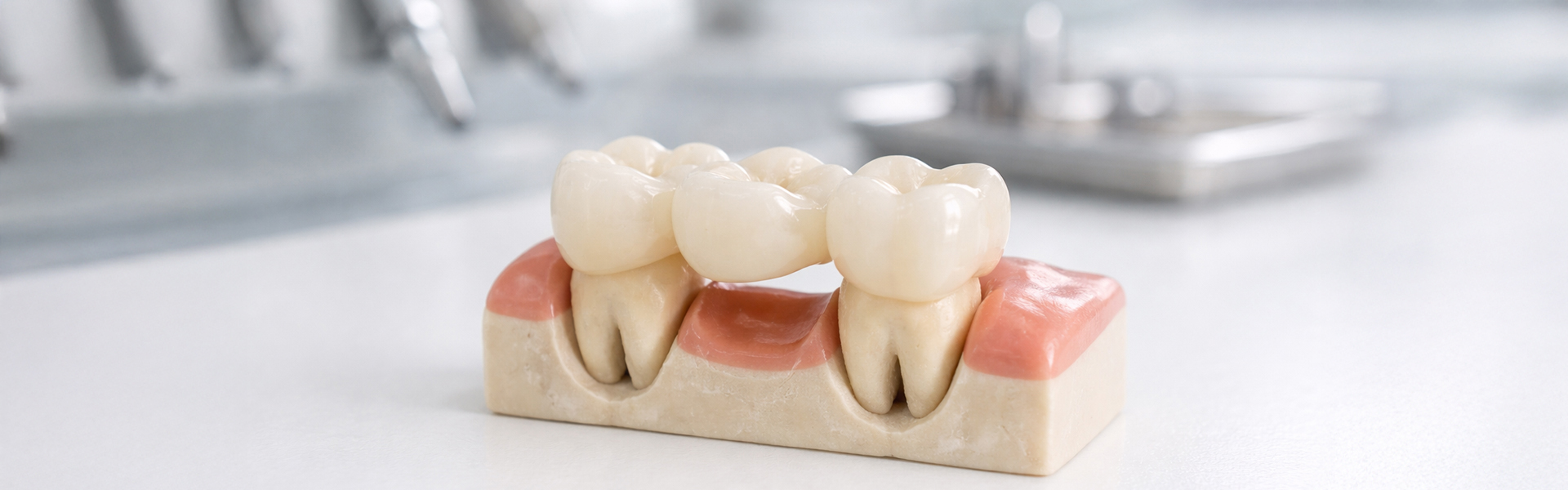
The artificial replacement tooth, known as a pontic, fills the space and recreates a continuous biting surface. Unlike a removable dental bridge, it remains securely in place, making everyday activities such as eating and speaking more comfortable.
Beyond replacing the visible gap, a bridge helps distribute chewing pressure more evenly across the surrounding teeth. This balanced force distribution supports bite stability and reduces unnecessary stress on individual teeth. Modern custom dental bridge restorations are designed from digital scans and bite records, allowing the final restoration to match the shape, colour, and contours of the surrounding teeth for a natural appearance.
Every Bridge Begins With Careful Treatment Planning
No two cases of missing tooth replacement are exactly alike. Before recommending dental bridge treatment, your dentist evaluates the reason for tooth loss, the health of the surrounding gums, and whether the supporting teeth are healthy enough to hold the restoration over the long term.
A comprehensive dental bridge consultation typically includes:
- Evaluation of periodontal health
- Assessment of the supporting abutment teeth
- Bite analysis
- Digital imaging or dental impressions
- Review of existing restorations
- Discussion of appropriate missing teeth treatment options
These findings guide the dental bridge procedure and help determine whether a dental crown bridge or another restorative dentistry solution is the most appropriate choice. Careful planning also allows your dentist to create a restoration that functions comfortably within your natural bite instead of simply replacing the missing tooth.
Why Early Evaluation Matters
Many people wait until chewing becomes uncomfortable before seeking care. By that point, neighbouring teeth may already have shifted enough to complicate treatment. Scheduling an evaluation soon after tooth loss allows your dentist to identify changes in your bite, discuss permanent tooth replacement options, and recommend the approach that best preserves long-term oral health.
What to Expect During the Dental Bridge Procedure
Once a bridge has been recommended, the supporting teeth are carefully prepared to securely anchor the restoration. Digital scans or dental impressions capture the shape of your teeth and bite, allowing the laboratory to fabricate a restoration that fits precisely. At the placement appointment, dentist near you checks the fit, appearance, and dental occlusion before permanently bonding the bridge. Small bite adjustments may be made to ensure that chewing forces are distributed evenly and that the restoration feels comfortable during everyday use.
Dental Bridge vs. Implant
Many patients ask whether a bridge or an implant is the better choice. The answer depends on your oral health, the condition of the surrounding teeth, and your long-term treatment goals.
A bridge may be recommended when the neighbouring teeth already require crowns or when a fixed restoration can restore function without surgery. An implant may be appropriate when there is adequate bone support, and preserving adjacent teeth is the preferred option.
Caring for Your Bridge
Daily care plays an important role in the long-term success of a bridge. Brushing twice a day, cleaning beneath the pontic with floss threaders or interdental brushes, and attending routine dental checkups help protect the supporting teeth and surrounding gums.
Good periodontal health also contributes to the longevity of dental bridges. With consistent home care and regular professional maintenance, many bridges remain functional for many years.
What Affects Dental Bridge Cost?
The cost of a dental bridge varies because every restorative case is different. The overall fee is determined by your individual treatment needs, including the number of missing teeth, the condition of the neighbouring teeth, the materials chosen, and any preparatory dental care.
During your consultation, your dentist will explain the available restorative dental solutions, discuss the expected costs, and recommend the option that best supports your oral health and long-term function.
Choosing the Right Restorative Dentist
Replacing a missing tooth requires more than technical skill. Accurate diagnosis, thoughtful treatment planning, and careful bite evaluation all influence how well the restoration performs over time.
If you’re considering dental bridges in Ellicott City, MD, choose a practice that evaluates your bite, gum health, and supporting teeth before recommending treatment. A personalized approach helps ensure the restoration is designed around your individual needs rather than a standard solution.
Preferred Dental provides customized restorative care using modern diagnostic technology and detailed treatment planning. Whether you have recently experienced tooth loss or are comparing different missing teeth treatment options, a comprehensive evaluation can help you choose the most appropriate path toward long-term oral health.
Final Thoughts
A missing tooth affects more than the appearance of your smile. Left untreated, the surrounding teeth may gradually shift, changing the way your bite functions and making future treatment more complex. Replacing the space with a well-designed tooth bridge helps maintain bite stability, improves chewing comfort, and supports the health of the remaining teeth.
Seeking care sooner rather than later often preserves more treatment options and allows restorative treatment to begin before significant changes develop.
Frequently Asked Questions
Yes. Replacing the missing tooth helps maintain the position of neighbouring teeth and reduces the tendency for them to drift into the space left by the missing tooth.
Your dentist evaluates the supporting teeth, periodontal health, bite relationship, and location of the missing tooth before recommending the most appropriate replacement option.
Modern bridges are custom-made to match the colour, shape, and contours of your surrounding teeth, allowing the restoration to blend naturally with your smile.
In addition to daily brushing, use floss threaders or interdental brushes to clean underneath the pontic and around the supporting teeth. Regular professional cleanings are also important.
In many cases, yes. Replacing the tooth before neighbouring teeth begin to shift can simplify treatment and help maintain a stable bite.